Best Website for Herkimer Diamond Information
Last Updated:

About this Webpage:










Free Website Where Herkimer Diamond Enthusiasts Share Information with the Public
Scroll down
Dr.C. did two talks at the Herkimer Diamond Festival (July)which are in a Youtube movie. The research on the Herkimer District is in need of samples and photos.
How can you help? Visit the "how to help" page.



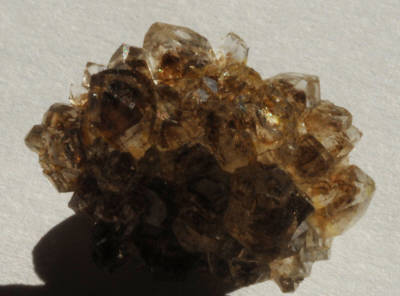
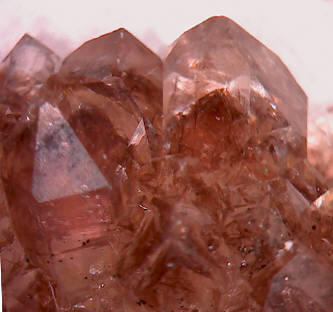
Druze quartz is quartz that occurrs as coatings of crystals over rock (sometimes over other minerals). The crystals are usually touching each other, as can be seen in the photo on the left. It the Herkiner district there are several different phases of druze and each has its own character.
As with other mineral phases the druze episodes vary in intensity and effect across the district.



W. David Hoisington, Ph.D.

Early Pyramidal Druze


Prismatic Druze

Baby Floater Druze

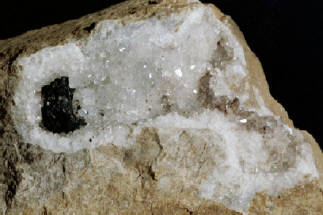
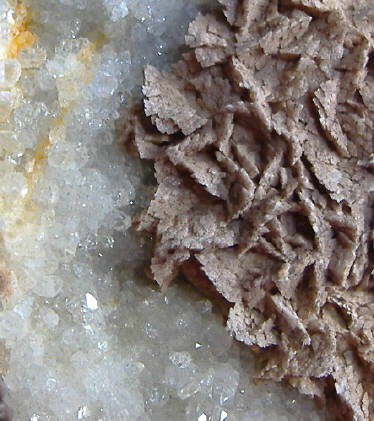
To the left, is a specimen (6 cm across) with a coating of pyramidal white "normal" druze with some hydrocarbon on top. The pyramidal shape is like rows of little mountain peaks (which you can see in the photo below). This is from Fonda, NY (DA) and actually difficult to find there as most of the white druze is coated with a second smokey druze - some of which you can see on the right side. Most often the smokey druze will simply duplicate (as an overgrowth) the shape of the earlier white druze. Photo Dr.C., 2008. Below is a close up photo of the white early druze.


Pyramidal Druze Variations

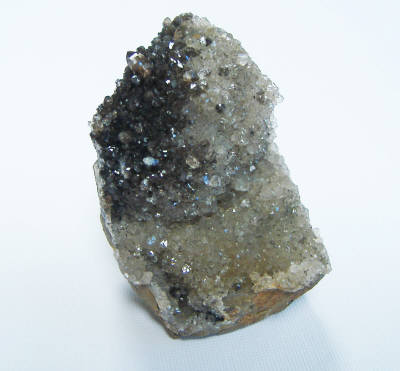
To the right is an example of both black druze and white druze. On close examination both the white and the black are of the same crystal formation and appear to have formed at the same time. The difference in "blackness" is due to the amount of hydrocarbon material available to the crystals during the time they formed. In addition, since some have a black dust as a coating (which does wash off) it appears that there was movement of hydrocarbon material in the pockets after the quartz druze was formed. This specimen is from Middleville, NY (HDM) and is 7 cm tall. Photo Dr.C. 2008.
It is clear in this sample that the hydrocarbon is not equally distributed to all the crystals (or all the solution which formed the crystals). This unequal mix of silica bearing fluids and hydrocarbon is seen throughout the district and is one of the main reasons for the differences between deposits.
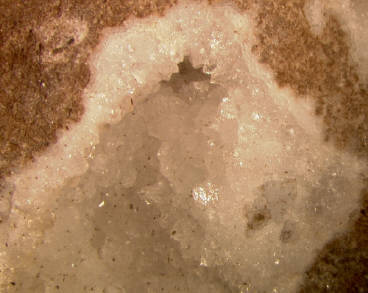
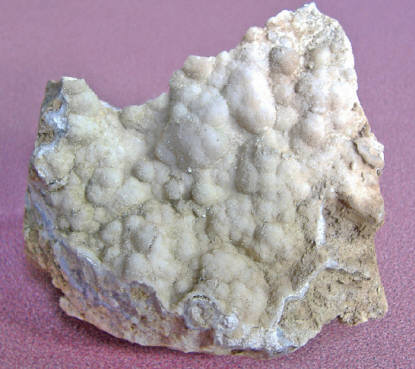
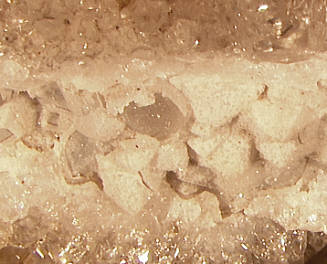
To the right, the specimen is 9 cm across, from Turtle Clan Ridge (TCR), photo Dr.C. 2009. This is a first phase pyramidal druze. The difference is that the the crystals did not grow very much and they are coated with a thin layers of cryptocrystalline quartz (as seen in the above microsope photo). The result looks like a sparkling coating of snow. Since this is an early phase of mineral deposition it is often affected by all the events that follow (and there are many). Finding pristine samples of "snowball druze" is not easy, but it may be that altered samples are present in many locations if they can be recognized as such.
One can also ponder on the the shape of this unique druze and how it mirrors the shape of some rounded wall rock found within larger Herkimer diamond pockets. There is a photo on the baby floater page, from pocket wall rock in AD that shows this rounded texture. Why is this rounded texture so common in the Herkimer district?
In the above photo of the Ace druze there is second phase druze mixed in with a coating of "baby herkimers". This baby Herkimer coating forms a druze in most of the Herkimer mines throughout the district. This third druze phase is probably not officially a druze but it is often interwoven with the second prismatic phase and sometimes forms a coating all by itself. It is also important field evidence regarding the formation Herkimer diamonds. Because this phase of quartz mineralization is so important to the history of Herkimer diamond formation it deserves its own web page. Click -baby floater page.

Prismatic Druze Variations

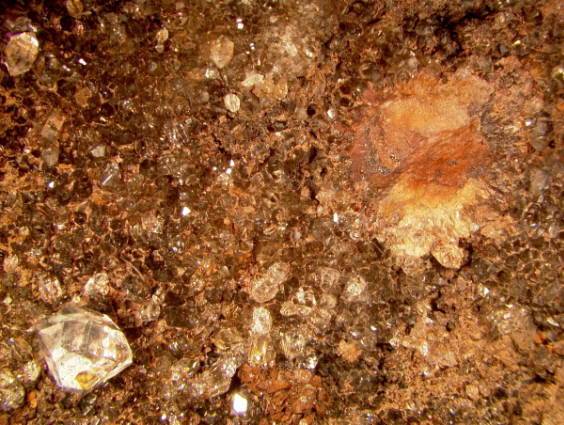
"Ace Druze"
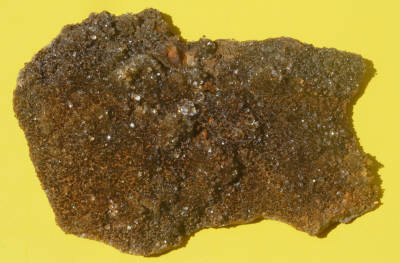
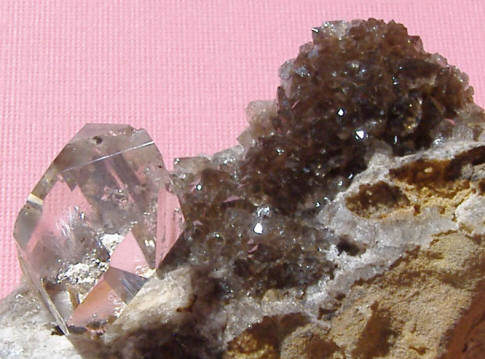
This "Ace druze" is a mixture of small prismatic second phase druze and the third phase baby floater druze, often over a rust stained host rock. Specimen donated by the owner of the Ace of Diamonds mine. Photo Dr.C. 2009. The area around the blue arrow is exposed rock under the druze. You might note that there is no rind texture like there is with the first phase druze. The first phase druze is absent. The druze almost always has this dark golden brown appearance. In addition, on the edge of the plate can be found examples of the "picket fence" habit illustrated in the photo above. This druze apears to be quite plentiful at AD and can form large sheets (more than a foot square)
Note the small Herkimer diamond on the lower left (5 mm tip-to-tip).
"Needle Druze" - very rare
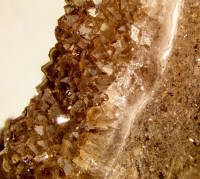
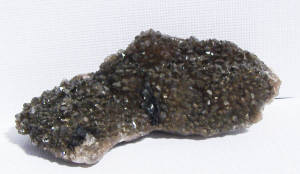
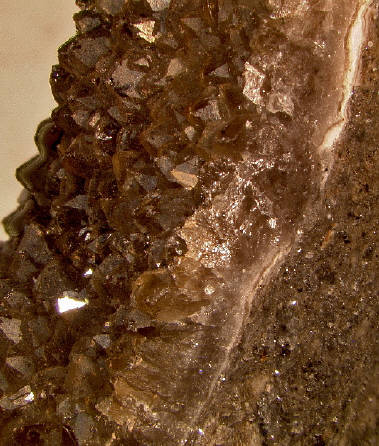
Two photos of what is here called "Ace Druze". The bottom is a close up of the one on the right. The druze occurs as rust brown plates generally less than an inch thick. They are fairly common for the Ace of Diamonds mine, and thus the name.
White layers probably resonsible for the "snowball" druze below. Note the thin layers flaking off of one small (1 mm) pyramidial quartz crystal in the center.
The photo left (specimen from TCR, 5mm across) shows how the prismatic druze will often grow in parallel groups, This specimen has not been cleaned. (Photo Dr.C., 2009) - showing the rust staining which is frequent at TCR. Dolomite crystals at the base.
This parallel growth pattern of the second phase druze is its characteristic, along with no rind contact with the host rock. This parallel growth is shown in the next series of photos.
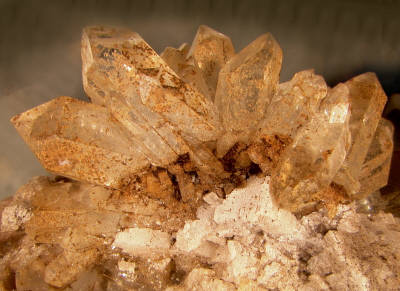
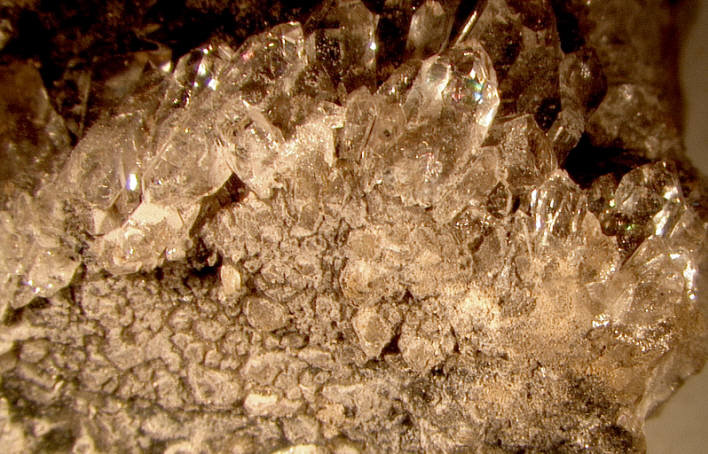
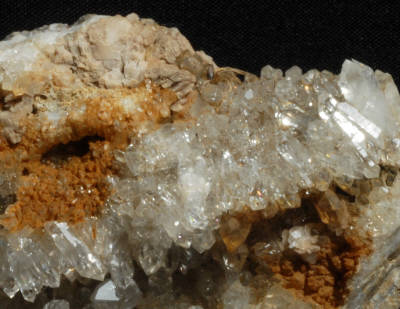
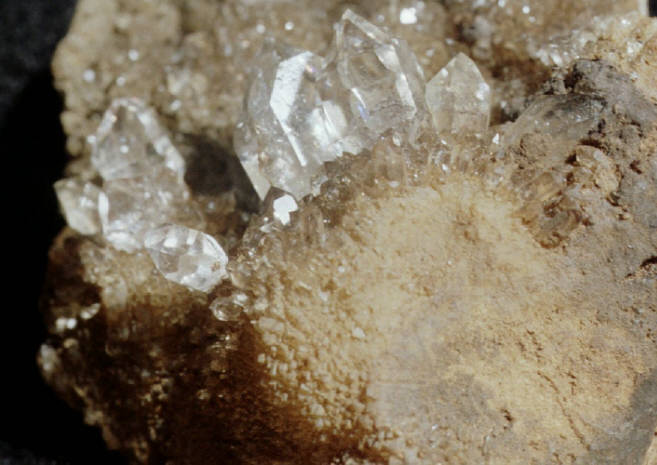
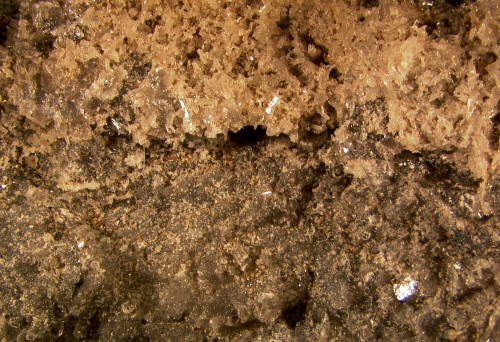
The photo to the left shows a grey/smoky pyramidal (1st phase) quartz overlain by a prismatic needle druze. You can see a band of this druze at the top. Note the etching of the 1st phase quartz. The specimen is from TCR, and it is the only location in the Herkimer district where such a crystal habit has been found, and only one specimen was found. Photo Dr.C., 2010 - 3 cm across. Specimen collected with permisssion from the mine owners, 2009.
Close up of this specimen shown on the right.
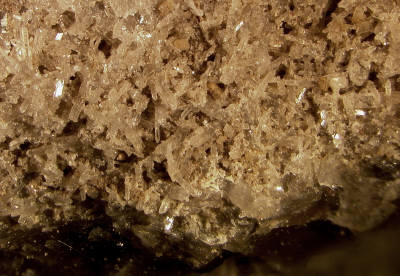
The specimen on the right is from TCR and shows the parallel growth of the second phase druze quite nicely. Looks like a picket fence. Also visable is phase 1 druze, the rust covered little pyramids in the background. Distance across the photo is about 4 cm (Photo Dr.C., 2009). Phase 2 druze is well developed at TCR.
The specimen on the right is from DA and shows the parallel growth of the second phase druze on top of phase 1 druze, the white covered little pyramids at the base. Distance across the photo is about 2 cm (Photo Dr.C., 2008). Finding any examples of phase two druze at DA is difficult.
May, 2012