
Best Website for Herkimer Diamond Information
Last Updated:

About this Webpage:










Free Website Where Herkimer Diamond Enthusiasts Share Information with the Public
Scroll down
Dr.C. did two talks at the Herkimer Diamond Festival (July)which are in a Youtube movie. The research on the Herkimer District is in need of samples and photos.
How can you help? Visit the "how to help" page.




Where there are Herkimer diamonds there is also hydrocarbon. Some miners and collectors talk about "chasing the carbon", meaning that when they dig for crystals they try to do so where there is a larger amount of hydrocarbon. The local term for this hyrocarbon material is "anthraxolite", but that term should be replaced with the term hydrocarbon given the diversity of hydrocarbon features throughout the district and the likelihood that it is not all anthraxolite.
Information here supports the oil and seed crystal theory tied to the formation of Herkimer diamonds.


Common Hydrocarbon Occurrences

Variations in Hydrocarbon Occurrences

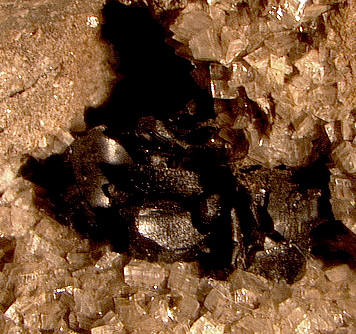
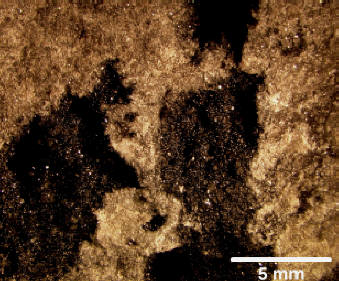
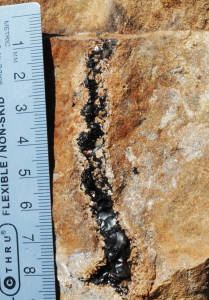
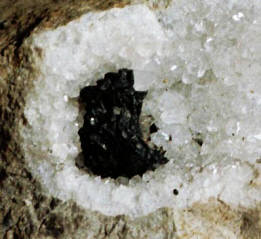
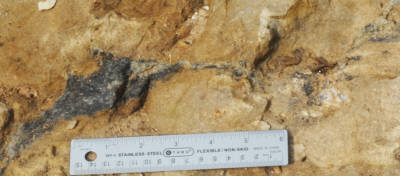
This collection of photos represents the most common occurences of hydrocarbon in the Herkimer district (photos, except #7, by Dr. C.) - not shown here are hydrocarbon inclusions.
Photo 1: Filling in vugs lined with dolomite. Note the shiny concave look seen at the arrow.
Photo 2: A close up of hydrocarbon coating early dolomite crystals. Note the shiny curved features.
Photo 3: Filling in vugs coated with druze.
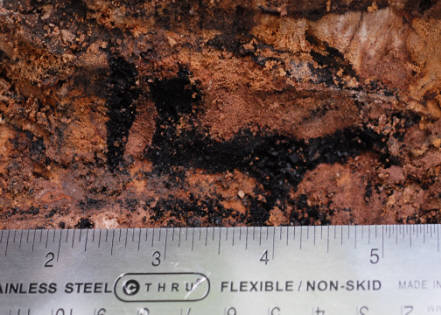
Photo 4: As fracture coatings. This coating is from the lower left to the upper right, with a 6 inch ruler for scale. it is filling in angular openings and cracks in the rock. In some mines there is a close relationship between this type of occurence and the occurence of Herkimer diamond pockets.
Photo 5: This is a film coating of hydrocarbon over early dolomite. Although this is not common throughout the district, it is common in Middleville, NY.
Photos 6 and 7: There is an association of hydrocarbon and clear Herkimer diamonds. Pockets that are packed with hydrocarbon, and contain Herkimer diamonds, will often have very clear crystals. See the Questions page for more info (link top of page).
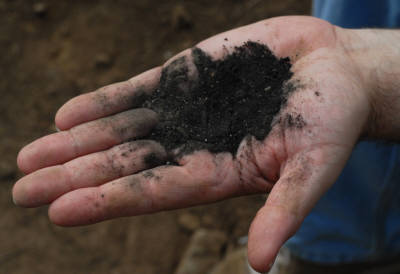
Photo 8: Hydrocarbon as a fine dust.
Photo 9: Vertical migration of hydrocarbon across bedding and horizonal flow. Bedding plane is parallel to the ruler.
Photo 1, from TCR
Photo 2, from DA
Photo 3, from DA
Photo 4, from TCR
Photo 5, from AD

W. David Hoisington, Ph.D.
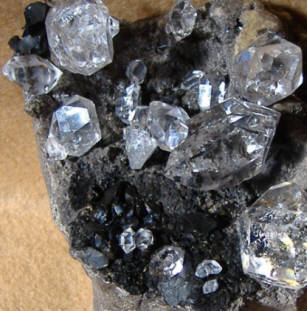
Photo 6, from DA
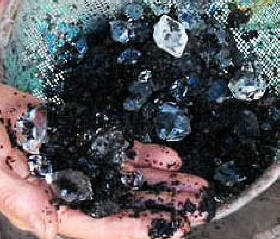
Photo 7: By Bill and Anne. From their AD claim, 2009.
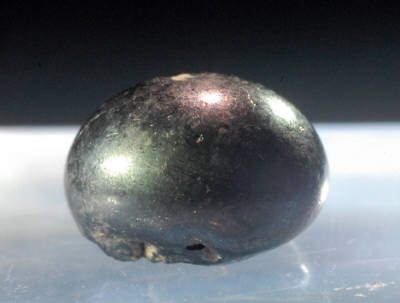
Below is a photo of an unusual specimen, one probably passed over by many in the hunt for glitter.
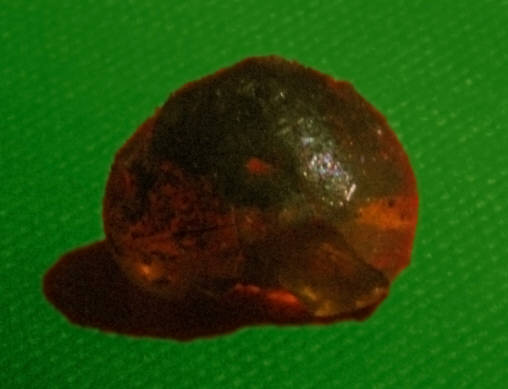
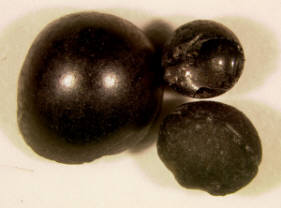
Here is a round amber sphere (9 mm), if it were crystaline, solid to the touch one could question its placement here on the hydrocarbon page. But this material is "rubber like". You can push on it and it deforms but then bounces back.
Its spherical shape and size is simlar to the hydrocarbon spheres found else where, as shown in the photo at the top of this page and below.
This specimen comes from the HBQ, which is know for its low level of weathering effects and for its "odd smell of gas" reportedly present in the pocket zones.
Thanks to Frank for the opportunity to photograph this (2010).
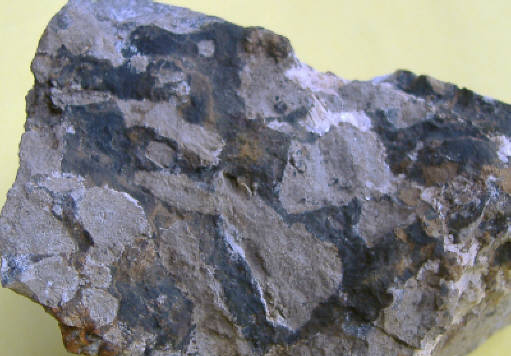
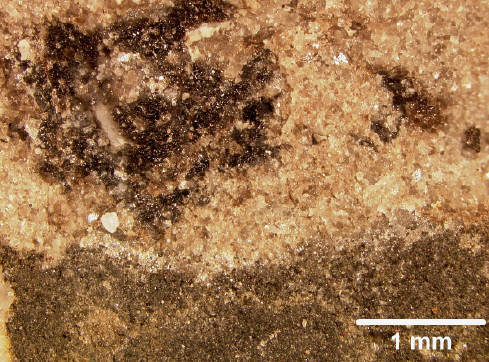
Sand soaked with hydrocarbon - A different type of occurrence

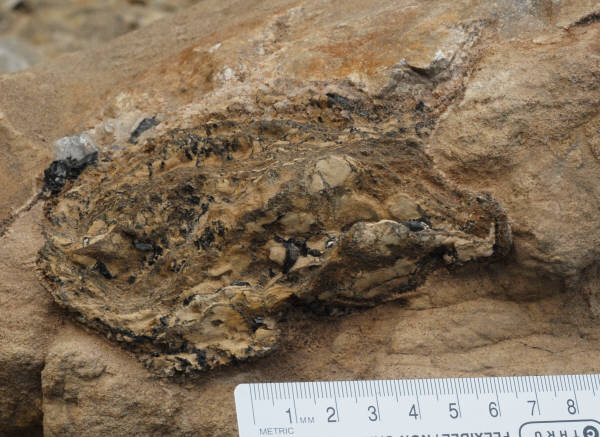
On the left is a specimen with black hydrocarbon, and a pretty ugly one. It isn't one a collector would likely stop to look at. It is sandstone soaked with hydrocarbon. The host rock for Herkimer diamonds has sand layers and these, like in many oil deposits, can act as a sponge for oil.
Below is a close up photo that shows how different looking this saturated sand is from the "normal" hydrocarbon occurrence in vugs.
It is possible that this sandstone soaked hydrocarbon occurrence is more common throughout the district than has previously been noted. It just isn't a "take home" rock nor does it contain Herkimer diamonds. It gets tossed out with the other mine waste.

Conclusions

Geology is often about fitting the best thoeory to all the evidence available. The old idea that most of the black material in the Herkimer district came from stromatolites is not a good fit with all of the evidence. The best fit is the oil and seed crystal theory, which says that the black material is from oil and that it was there prior to and during the formation of the Herkimer diamonds.
The information on this page can be combined with the information that is on the quartz sphere page. The evidence from these two pages, along with some of the inclusion information (including the science) suggests that oil bearing fluids moved through these rocks. It is also likely that there are various types of petroleum residue products left behind and that it probably can't all be called anthraxolite. It is better to call it hydrocarbon.
Information from the General Mineral Sequence suggests that there were several pulses of oil bearing fluids - which is quite common in oil fields. The timing and intensity of these pulses, along with the timing/intensity of the quartz events, appears to be quite varied - not only across the district but sometimes across a single deposit.
The Herkimer diamond mining district is not only unique for the variety of doubly terminated quartz crystals, but also because it most likely represents a fossilized oil deposit .
The importance of hydrocarbons in connection to the formation of clear Herkimer diamonds is discussed on the FAQ page. It is possible that the hydrocarbon plays a role in other ways yet to be discovered.
May, 2012
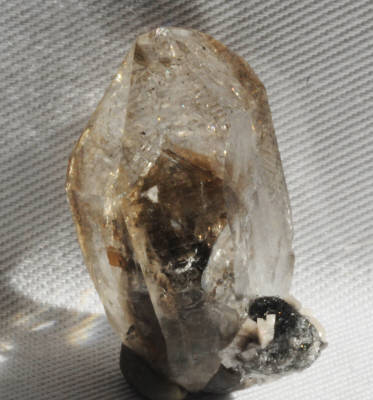
Phantoms with brown hydrocarbon - Hydrocarbon and quartz together
Both of the above photos show phantom quartz crystals, that is when there looks like a smaller duplicate crystal has left its imprint on the inside of a larger crystal that mimics the same shape. What is of interest here is that the phantom is brown, and that a close up shows this brown to be minute film layers alternating with quartz layers during the growth of the quartz crystal. It seems that these phantoms are found only in the early quartz phases and best seen in the prismatic episode . Again an indication that there was oil prior to the formation of Herkimer diamonds - evidence for the oil and crystal seed theory.
Photo 9, from DA
Photo 8, from DA

Hydrocarbons and Paleokarst



At the blue arrow is a depression in the Cambrian Herkimer host rock. The depression is shapped sort of like the map of the USA. The host rock is at the red arrow. The depression at the blue arrow is filled in with sand and pebbles. This is most likely a paleokarst feature, something common to upper Cambrain rocks.
What is a paleokarst? It is a fossilized karst. A karst is basicaly a limestone that was exposed to air and weathered. This is a feature that was made AFTER the rock was made.
Look closely and you will see that there is black hydrocarbon scattered throughout the material in the depression. It is just not possible to pose a sygenetic origin, tied to when the host rock formed, for this black material. There are "stromatolite" proponents who argue that the black material in Herkimer deposits comes from these cyanobacteria. Such an explanation can not explain this paloekarst evidence, nor much of the other field evidence. The best explanation is one of migrating hydrocarbon.
This supports the oil and seed crystal theory.
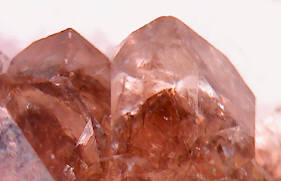
Below: Brown phantom druze from DA. See the druze page for more information.